Eurocucina 2012: Just images


Even if you’ve been to Eurocucina once before, as I have back in 2006, the show can still be overwhelming. I think the trick is to go to each and every one—which means every other year—to get a better sense of the evolution of trends. Otherwise, after seeing a gazillion beautifully presented kitchens, fondling their countertops and opening their cabinet doors and drawers, your vision and your memory get a little blurry and you’re still not sure what it is you saw.

First, you must understand that the show is huge. Even though regulars, such as Maxine Laauer, founder and CEO of Sphere Trending—with whom I had the great pleasure of having dinner on my first night in Milan—noted that many of the companies have reduced their booth size this year, Eurocucina still occupied four halls. And because the majority of the floor space is dedicated to cabinet manufacturers, the booths each house multiple fully appointed vignettes, which means there is a lot to look at, touch and feel. One moment you could be marveling at the finish on a cabinet door or wondering if a cool texture on a countertop might be a pain to clean and the next you’re distracted by a cluster of pendants made from—whoa!—odd-sized pots and pans


or by the dozens of brown eggs artistically placed in the center of a dining table or the fleet of cute birdhouses adorning the entrance to a booth or the super-tall ladders being used as a towel rack.


And then there was all the greenery displayed throughout the show, be it in pots placed on a shelf or in the rear of a countertop or in oversized planters and more inspirational arrangements to lend the booth a more back-to-nature feel.


In fact, Mother Nature seemed to be enjoying a fair bit of attention and celebration at the show but perhaps this is but a continuation from the last edition of Eurocucina. Regardless, one could boil this love down to two messages: Respect nature because its resources are limited and therefore precious, and, well, respect nature because it is good, healthful and wholesome.

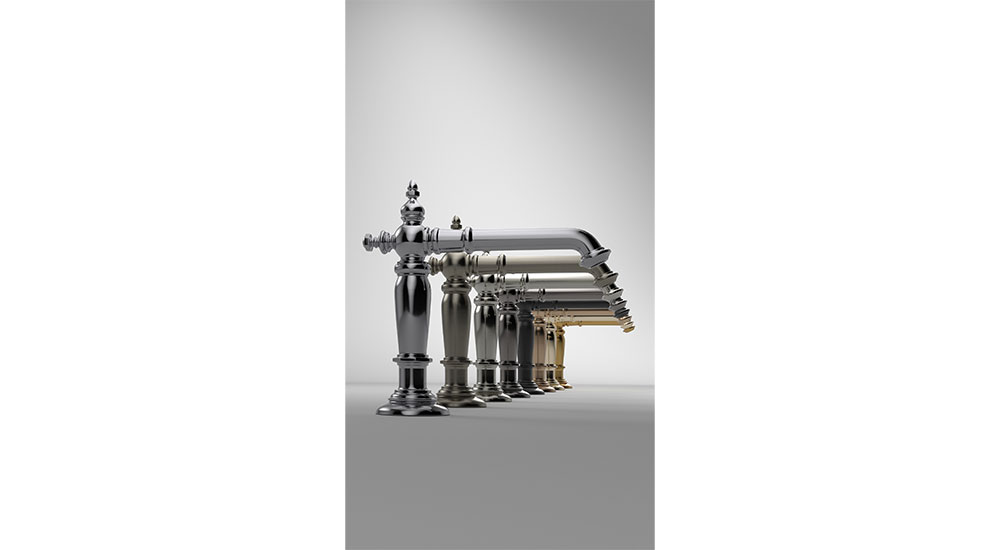
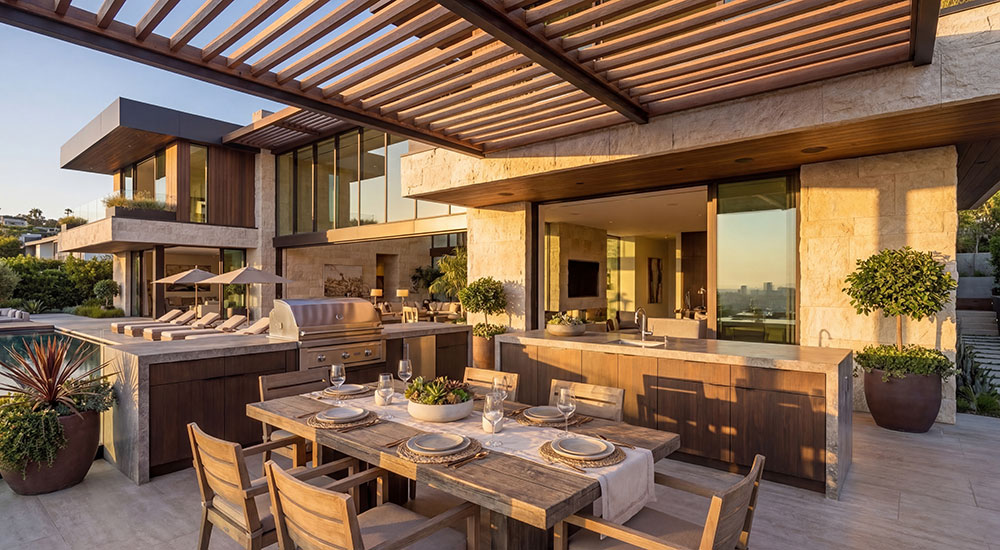
Hopefully after some time, I’ll be better able to process all the images in my head and on the press CDs I collected and come up with a coherent article. In the meantime, here are some photos I snapped on the show floor. I apologize for them being so out of order (there are two albums—one for April 18 and another for April 19).

Bookmark and Share

Builder’s tips for green

While the home we designed in the East Bay (which is due to be the first LEED platinum home in Piedmont) is under construction, it is great to check in with people on the team to learn from their experiences. Today we check in with Alex Hodgkinson, of McCuthcheon Construction, the builder of the project.

Me: What are some elements of building a sustainable home that you are most excited about?
Alex: Building sustainably has the incredible advantage of being interesting and good for the planet, both at the same time. There are more challenges than conventional construction in some ways, since sustainable projects usually require us to learn some new things. But learning new things is also incredibly stimulating. Also, clients and architects who are deeply interested in sustainable building tend to be forward-thinking and innovative, which makes working with them a whole lot more interesting and consequently more fun.

Me: What are some of challenges of remodeling a green building?
Alex: Remodeling is inherently green, because we are, in a real sense, recycling buildings. Giving new life to an older home is a great satisfaction. If we do it right, and truly take advantage of the opportunities present when we have the house torn apart for remodeling, we can create a snug and comfortable home that will serve several more generations well into the future.

Some of the challenges are due to the changing structural requirements—for example, existing unreinforced concrete will usually not meet modern engineering requirements. Another set of challenges is in design—older homes typically do not have the kind of open and welcoming floor plan that modern families crave. They also were not well connected to the outdoors. Since they were designed in an era when energy was cheap, we see single-pane windows, minimal insulation, antiquated and inefficient mechanical equipment, etc. On the other hand, it does not take much to make great improvements. Just updating the toilets to modern HET units can save an enormous amount of water. Improving the insulation and weather-stripping saves energy. Adding energy efficient appliances, lighting and mechanical equipment is a no-brainer. There are many such basic improvements that reduce the environmental “footprint” of the home while also saving money and giving more comfort and better health to the occupants.

Me: What would you recommend to homeowners who are interested in building or remodeling a green home?
Alex: 1. Start with efficiency first. Grab the low-hanging fruit of better insulation and weather-stripping, for example.

2. If you really want to do energy work correctly, have a home energy audit to identify and prioritize all the opportunities.

3. Don’t forget to include water conservation as well, for example, specifying water efficient fixtures throughout.

4. Right size the home. Only add square footage if you really need it. Make every square foot count.

5. Spend time and money on good design, which will give the most long-lasting results and save the environment by not having to be re-done for a long time

6. Hire a qualified contractor who is experienced with green building—certified by an independent organization

7. Hang in there—remodeling can be challenging!

8. Get the help of a good team of architect and contractor to help you navigate the process.

Me: What items should builders and home owners consider when going through the LEED process?
Alex: 1. Documentation is a big key—it’s not enough to do the right thing, you have to be able to prove it in writing and photographs.

2. Hire a good LEED consultant to help oversee the process to make sure you get all the points you need and want

3. Plan for extra points, so if you can’t get the all the points your expected on one item, you can still get the points somewhere else.

Me: What are your favorite sustainable aspects of this project?
Alex: 1. We have a great client who is truly committed to building a showcase LEED platinum project, which is a really fun challenge

2. We have a great architectural team which means we will have a beautiful and timeless home which will provide genuine satisfaction for many years to come.

3. The water conservation aspects are extensive, with graywater and rainwater systems at a high level of sophistication

4. I believe this is the first LEED platinum home remodeled in Piedmont, which we hope will inspire others to do the same.

5. It’s exciting to finally see LED lighting coming into its own.

McCutcheon Construction
Piedmont Project

Michelle Kaufmann

Bookmark and Share

Why we buy kitchens

Paco Underhill wrote an excellent book titled Why We Buy. It deals with motivations for purchases for a range of products. It is touted as the science of purchasing, since Mr. Underhill uses many methods to collect data, including filming consumers during the buying process.

Related studies have shown an emergence of neuro-marketing where researches are able to measure a neurological response to a product or brand. Here, there is no interpretation, since actual brain waves are measured in response to stimuli.

While we can’t place our clients into CAT scans (yet), the fact remains that unlocking the motivation for the purchase is the key to the sale. Here again, the design is a means to the end: certainly not unimportant, but mostly meaningless if we haven’t yet uncovered why they are buying.

If someone is shopping for a car and mentions safety as being important, the salesperson should show their safest model or emphasize the safety traits of the model of interest. The same remains for a kitchen purchase.

I once had a client who I was interviewing for a kitchen remodel (notice, I said interviewing). During the discussion, he asked if he could make a quick call. He ended up calling his brother and asked him how big his kitchen was (can you say kitchen envy?). The keys to the kingdom were in front of me.

Now, most clients are not quite so obvious. We know that many who shop for a kitchen may do little actual cooking. We can cut to that answer by asking what sort of cooking do they like to do: baking, family meals, entertainment, etc. And the key follow-up question: How many cooks will use this space?

If we find that they really don’t like to cook, we need to probe deeper. They could swing on the pendulum from “I really don’t care since I’m just trying to unload this house” to “I want to keep up with the Joneses.”  Of course, we would prefer the latter.

And when all was said and done, we would provide them with a design that gives them health, safety and welfare that they deserve in their final product. All the while without having to put them into a CAT scan.

—Nick Ritota

Bookmark and Share

American Standard receives grant to develop prefab toilet

When this press release about American Standard Brands building a toilet for developing countries crossed my desk, I was reminded of The Big Necessity: The Unmentionable World of Human Waste and Why It Matters, a book I started reading (and nearly finished) after attending an entertaining talk given by its author Rose George. I was reminded because it included a section about the lack of toilets and sanitation systems in certain parts of the world, as well as one’s man’s quest to draw attention to this issue. (The book is definitely worth a read.)

The press release quotes some statistics from the WHO/UNICEF Joint Marketing Programme for Water Safety and Sanitation that are pretty striking. Roughly 40 percent of the world’s population does not have access to adequate sanitation facilities, and around 1.2 billion people worldwide “practice open defecation.” As a result, approximately 1.6 million people, including young children under the age of five, die from diseases that stem from contaminated drinking water and poor hygiene but are largely preventable.

American Standard’s grant from the Bill & Melinda Gates Foundation will help address and redress this issue. The company will develop and test a low-cost, prefab toilet system for for places such as this village in Bangladesh (shown below). The following photos were taken during a fact-finding trip during which interviews were conducted by Daigo Ishiyama, an industrial designer with American Standard Brands, with villagers. The last two images are of a typical Bangladesh latrine. To “flush” away waste, water is manually poured into a pit located directly under it. The openness attracts flies.

Other similar projects are underway. When I interviewed Fu-tung Cheng for K+BB’s January/February Focus column, he mentioned he was working with Engineers Without Borders on an affordable compostable toilet made of concrete.

I don’t know how else to express my thoughts on these efforts except to say: I am in awe.

Have a great weekend.

—Alice

Bookmark and Share

-ADVERTISEMENT-